
A major barrier to effective problem solving is assuming everyone approaches challenges the same way.
In reality, every team contains individuals with different strengths:
When organisations overlook these differences, valuable perspectives are missed.
Gallup’s strengths-based research shows that teams perform more effectively when members understand and leverage each other’s natural talents rather than attempting to solve problems independently.
The most successful teams combine expertise rather than relying on a single expert.
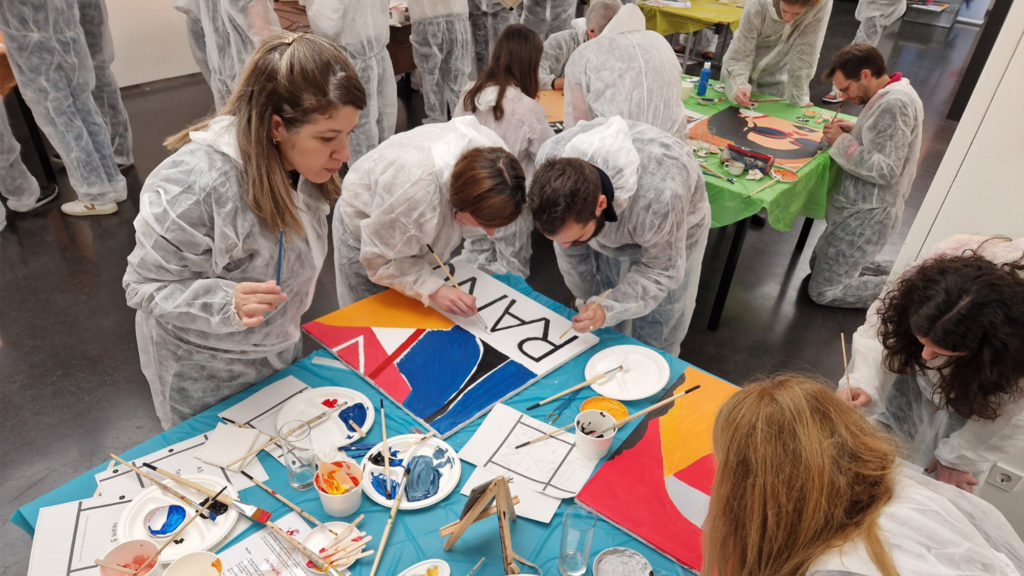
Complex business challenges are best addressed with multiple perspectives.
Deloitte research demonstrates that high-performing teams are more likely to encourage divergent thinking and consider a broader range of viewpoints when making decisions. Similarly, McKinsey identifies collaborative problem-solving as a critical capability for organisations seeking to improve innovation, agility, and execution.
When teams collaborate to solve challenges, organisations benefit from:
The result is not only better solutions but also stronger teams equipped to address future challenges.
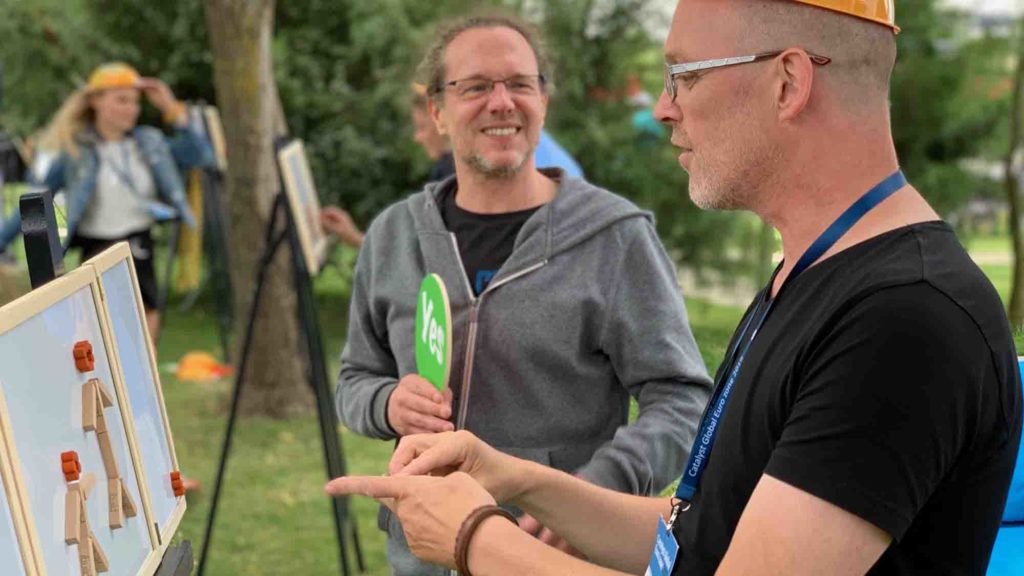
Experiential team building allows participants to practise problem-solving in realistic scenarios. Teams see firsthand how communication, collaboration, and diverse thinking impact results.
The strongest teams understand that each person brings unique strengths.
In Chain Reaction, teams coordinate interconnected tasks to achieve a single objective. Success relies on identifying who excels at planning, communication, creativity, attention to detail, and execution. Participants learn that aligning individual strengths toward a common goal produces the best solutions.
Similarly, iBuild challenges teams to communicate complex information accurately, reinforcing the importance of role clarity, trust, and active listening when solving problems collaboratively.
Workplace challenges often involve incomplete information, competing priorities, and tight deadlines.
Situation Room places teams in dynamic scenarios where they analyse information, prioritise actions, and make critical decisions together. Participants learn to think clearly under pressure while balancing speed and accuracy.
Drone Control also highlights the importance of communication and coordination. Teams adapt quickly to changing conditions, showing that collective decision-making often leads to better outcomes than individual action.
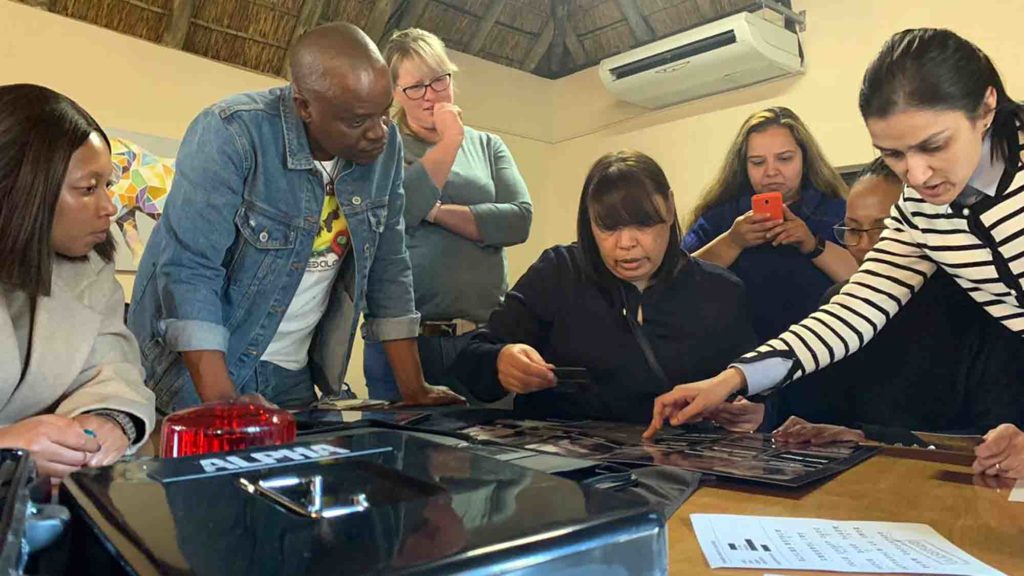
Effective problem solving starts with teams establishing a shared understanding of the challenge.
In The Big Picture, participants work on separate sections of a larger project without initially seeing the final outcome. Success depends on information sharing, alignment, and understanding how individual contributions connect to broader objectives.
This experience reflects the reality in modern organisations, where departments must collaborate across functions to achieve strategic outcomes.
Research consistently shows that diverse perspectives lead to stronger innovation and improved problem-solving.
Bean Around The World challenges participants to make strategic decisions, adapt to changing circumstances, and collaborate effectively to achieve sustainable outcomes. The activity reinforces how creative thinking and shared decision-making generate superior results.
Perfume also combines analytical thinking with creativity as teams develop and market a fragrance concept. Participants learn that innovation often arises when different perspectives, skills, and approaches come together.
Problem solving is not just about finding answers; it is about building behaviours that enable teams to perform consistently over time.
Peak Performance focuses on resilience, continuous improvement, and collective accountability. Participants experience how successful teams learn from setbacks, adapt their approach, and maintain focus on shared goals.
These lessons transfer directly to the workplace, helping teams face future challenges with greater confidence and effectiveness.
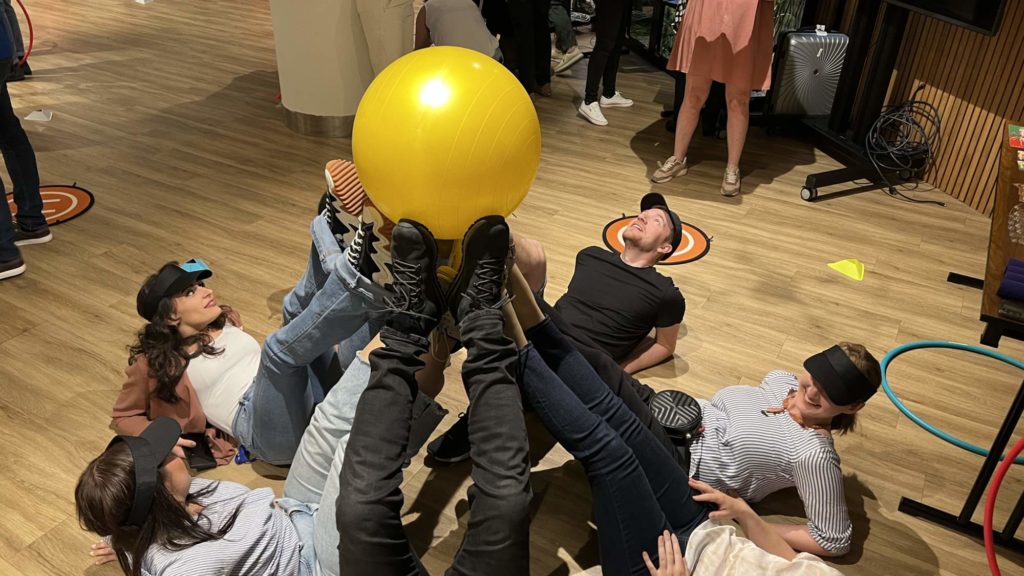
Catalyst’s problem-solving team building programs offer practical opportunities for teams to strengthen collaboration, communication, critical thinking, and decision-making skills.
Featured problem-solving experiences include:
Each program challenges participants to think differently, communicate effectively, and leverage every team member’s strengths to achieve a common goal.
Many organisations still reward individual achievement while expecting collaborative results.
However, modern work increasingly relies on collective intelligence rather than individual expertise alone.
Deloitte’s research on team performance suggests that organisations must evolve beyond traditional individual performance models and develop systems that support team effectiveness and shared success.
Problem-solving team building supports this shift by showing that the best solutions emerge when individuals combine their strengths toward a common goal.
Participants learn that success is not about who has the answer first, but about how effectively the team works together to find it.
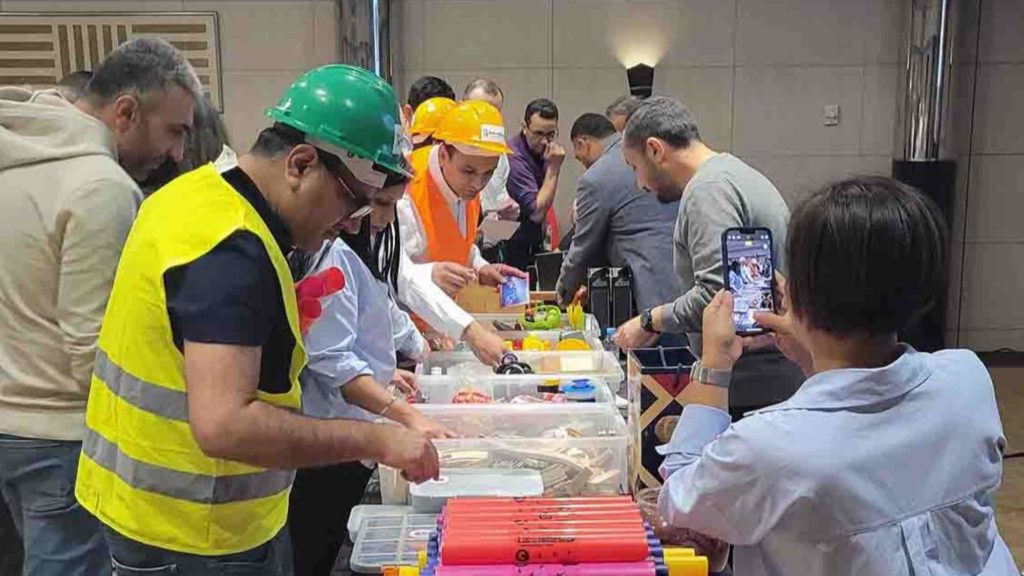
The most successful organisations do not view problem solving as a one-time event.
Instead, they build cultures where teams continuously learn, adapt, and improve.
SHRM identifies collaboration and teaming as critical capabilities for future organisational success, particularly as workplaces become more interconnected and dynamic.
Regular team building experiences reinforce these behaviours by encouraging:
Over time, these behaviours become embedded within organisational culture and contribute to sustained organisational performance.
The most effective teams don’t just solve problems faster—they solve them together.
Catalyst teambuilding experiences provide practical opportunities for participants to develop communication, critical thinking, collaboration, and decision-making skills while learning to leverage the strengths of every team member.
Whether through the strategic coordination required in Chain Reaction, the collaborative innovation of Perfume, the decision-making intensity of Situation Room, the communication challenges of Drone Control, or the shared achievement of The Big Picture, teams gain insights that translate directly into workplace performance.
Explore Catalyst’s problem-solving team building programs and discover how experiential learning can help your teams tackle challenges more effectively, together.
© 2026 All rights reserved.