
End-of-year events are often among the few occasions when an entire team, department, or organisation comes together outside the demands of everyday work.
This is particularly valuable for organisations with hybrid teams, multiple offices, or employees who seldom interact across departments.
However, simply bringing people together in the same space does not guarantee meaningful connections.
At traditional social gatherings, people tend to interact mainly with familiar colleagues. As a result, conversations often remain within established groups, limiting opportunities for cross-departmental engagement.
Shared meals and drinks are valuable, as social occasions contribute significantly to workplace culture.
When organisations invest time, resources, and effort in uniting their teams, the experience can be made even more rewarding.
Thoughtfully designed team-building activities encourage individuals to engage beyond their usual circles, collaborate with diverse colleagues, and recognise strengths they hadn't seen before.
The outcome extends beyond a memorable event; it creates opportunities to build relationships that benefit the team long after the celebration.

Workplace connection is essential, as it directly influences communication, collaboration, idea sharing, and mutual support among employees.
Deloitte's 2026 Global Human Capital Trends highlights the growing importance of human capabilities such as creativity, adaptability, and collaboration in an increasingly complex workplace. As organisations look to become more agile and break down traditional silos, bringing people together to strengthen relationships and practise working towards shared goals becomes increasingly valuable. Purposeful end-of-year team building offers an enjoyable opportunity to reinforce these capabilities while celebrating collective achievements.
Belbin's The Future of Teamwork 2027, drawing on insights from more than 78,000 individuals across 30+ countries, reinforces the importance of recognising individual strengths, understanding workplace behaviours and appreciating the different contributions people bring to a team. Purposeful team-building experiences provide an enjoyable opportunity to put these principles into practice, helping colleagues discover one another's strengths and experience the value of working together towards a shared goal.
This thinking is especially relevant to end-of-year celebrations. While social events create opportunities for interaction, purposeful shared experiences can deepen engagement by giving people collective goals to achieve. Working toward a common goal helps colleagues listen, communicate, contribute, and rely on one another. This process can reveal unexpected talents, foster appreciation for diverse perspectives, and facilitate relationships beyond routine working groups.
These experiences are especially valuable for teams that have focused primarily on individual responsibilities, deadlines, and departmental objectives throughout the year. The objective goes beyond assembling individuals; it is to foster a stronger sense of connection within the team.
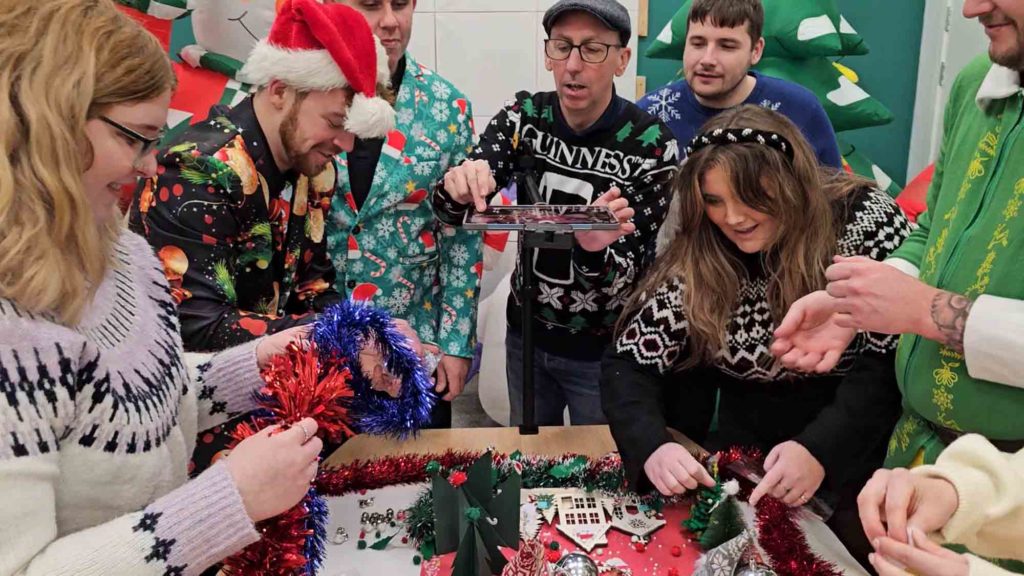
A common misconception about team building is that meaningful development requires formal training, structured workshops, or serious discussions.
In practice, highly engaging learning opportunities often occur when individuals are immersed in enjoyable challenges. For example, teams may collaborate to create music, solve complex problems, construct projects, or complete creative missions. Participants focus on the experience, enjoy the challenge, and work toward a shared outcome. At the same time, they practice valuable workplace skills throughout the activity.
Effective communication becomes essential, creative thinking is encouraged, and diverse perspectives are considered. Leadership emerges, decisions are made, and each participant assumes a role. Learning is integrated organically into the activity, rather than presented as a distinct lesson.
This approach aligns with experiential learning principles, where individuals build capabilities through active participation, practice, and reflection.
For organisations planning end-of-year celebrations, this approach offers an appealing combination: an enjoyable experience for employees and opportunities to strengthen skills essential for effective teamwork.
Importantly, the experience does not need to resemble a typical workday. The most effective activities are inherently engaging, with teamwork emerging naturally as the challenge incentivises collaboration.

End-of-year celebrations also provide an opportunity to acknowledge an often-overlooked aspect of organisational success: collective effort.
While individual performance matters, most organisational achievements depend on effective collaboration.
Projects are completed through cooperation, challenges are addressed through collective problem-solving, and innovation arises when diverse perspectives converge.
MIT Sloan Executive Education's discussion of lessons leaders can learn from successful sports teams highlights the importance of recognising contributions, celebrating shared success and learning from collective experiences.
End-of-year team-building activities can put these principles into practice. Rather than merely marking the end of the year, teams can engage in experiences where each contribution is valued and success is achieved collectively.
Outcomes may include creative performances, completed challenges, shared accomplishments, or meaningful contributions to the community. Regardless of format, these experiences serve as tangible reminders of what's possible when strengths come together.
This shift turns the celebration from a passive event into a collective achievement.

In many organisations, routine work demands often create silos. Employees typically collaborate with immediate colleagues, yet opportunities to build relationships across departments, locations, or hierarchical levels are often limited.
End-of-year celebrations present a natural opportunity to alter this dynamic. Purposeful team-building activities facilitate new groupings of employees, fostering interactions that may not occur during routine workdays.
For instance, a finance team member may discover shared creative interests with a marketing colleague, a new employee may lead a challenge alongside senior staff, and individuals who previously interacted only via email may collaborate in person.
Such moments contribute to a sense of organisational unity, shifting perceptions from isolated functions to a cohesive team. Because these experiences are enjoyable and distinct from typical workplace pressures, participants can interact in new ways.
For organisations anticipating a new year of shared objectives and challenges, stronger cross-functional relationships are a valuable outcome.
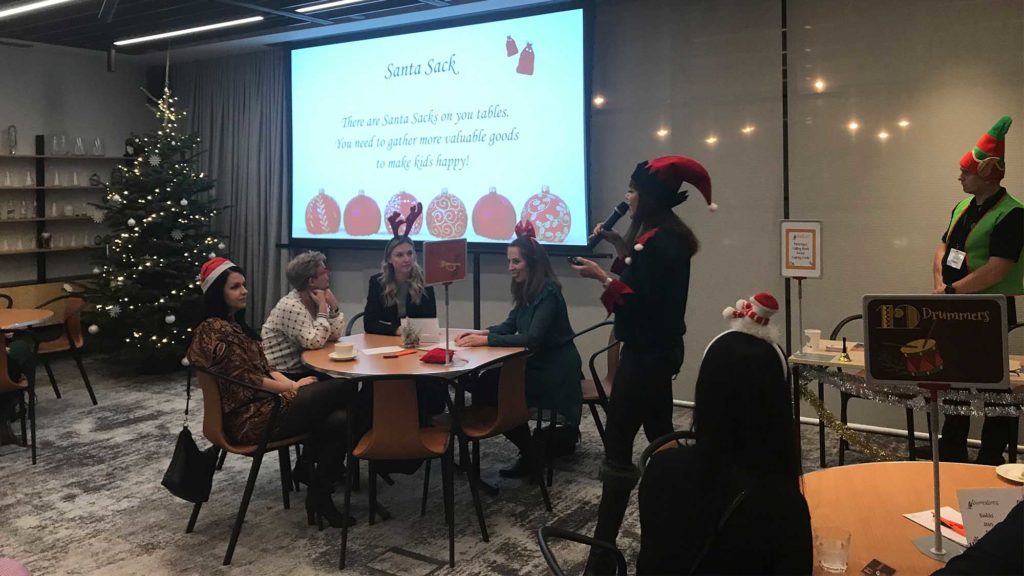
Purpose can extend beyond performance targets or professional development objectives. It can also include positive collective actions.
Corporate social responsibility initiatives give organisations opportunities to integrate end-of-year recognition with meaningful contributions.
Teams may collaborate to support charitable causes, strengthen local communities, or complete challenges that create positive social impact.
These experiences add another dimension to the celebration. Instead of focusing exclusively on organisational achievements, employees can contribute to causes beyond their immediate roles.
A shared purpose creates a powerful connection, especially when the outcomes of collective efforts are visible to all participants.
Like other purposeful team-building experiences, these activities can stay energetic, entertaining, and genuinely enjoyable.

1. Beat the Box Rescue Santa – A festive race against the clock that challenges teams to communicate, solve problems and work together towards a shared goal.
2. The Big Picture – A collaborative art experience where individual contributions combine to create one impressive masterpiece, celebrating the power of teamwork.
3. Quickfire Festive – Fast-paced, entertaining challenges that encourage quick thinking, collaboration and friendly competition.
4. Give Santa Sack – A festive CSR experience that brings teams together to create meaningful gifts for people in need.
5. Blockbusters Festive – A creative filmmaking challenge that encourages imagination, communication and collective achievement.
6. Twelve Teams of Christmas – A festive networking experience that helps colleagues connect, break down silos and strengthen workplace relationships.
7. Animate Festive – Teams collaborate to create their own festive animations, combining creativity, planning and shared accomplishment.
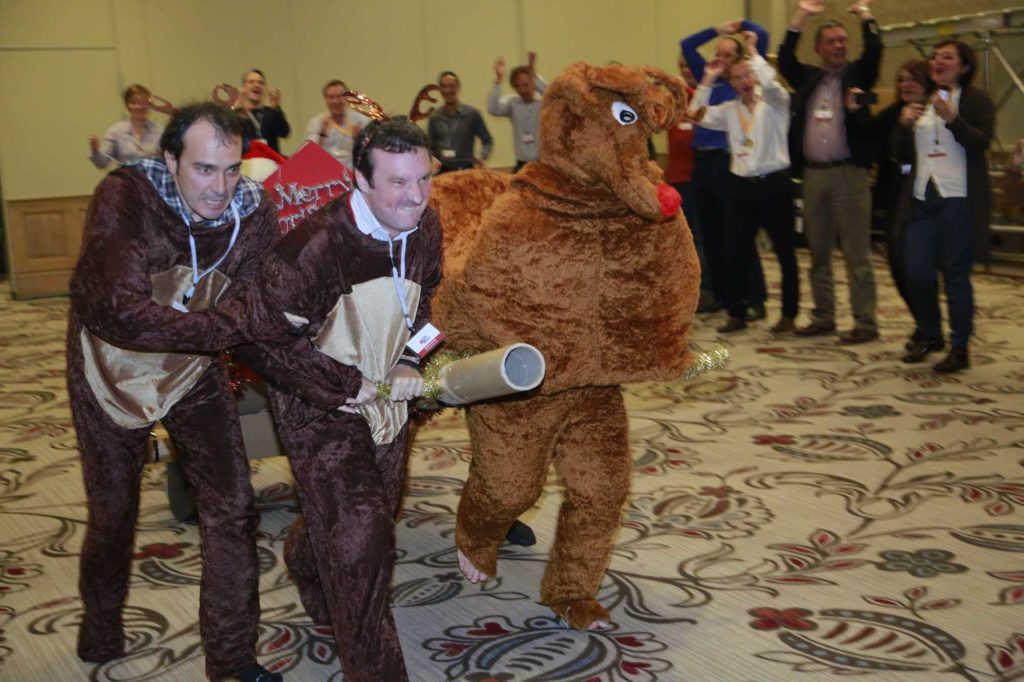
8. Flat Out Sleigh Ride – A hands-on festive challenge where teams design, build and race their own sleighs, putting creativity, coordination and teamwork into action.
The end of the year offers a natural opportunity to reflect on achievements and look ahead to future objectives.
For organisations, this period also offers an opportunity to reinforce the culture and relationships that underpin future success.
A well-designed team-building celebration helps teams end the year with stronger connections, renewed appreciation for colleagues, and positive shared experiences.
Such events reinforce desirable organisational behaviours, including collaboration, communication, creativity, trust, and shared responsibility.
While a single activity may not transform team culture immediately, sustained improvement requires ongoing support for these behaviours throughout the year.
Nevertheless, a meaningful shared experience can establish a positive foundation for future development. Such experiences remind employees that teamwork means integrating diverse strengths to achieve collective goals, not merely working in proximity.
Ending the year with shared success is an ideal outcome.

End-of-year events should be occasions employees look forward to. Employees should see them as rewards, not obligations, with opportunities to relax, connect, and enjoy time with colleagues.
Enjoyment and meaningful outcomes can coexist as complementary priorities. With the right activities, organisations can celebrate their employees while strengthening the relationships and skills that underpin team success.
Through creative collaboration, shared problem-solving, friendly competition, or community engagement, purposeful team building transforms celebrations into experiences with enduring value.
This year, organisations are encouraged to celebrate past achievements and foster new collective accomplishments.
Explore Catalyst's range of engaging end-of-year team-building experiences and discover how to combine celebration, connection and meaningful teamwork.
Research and references
These sources can be linked from the published article to reinforce its key themes.
1. MIT Sloan Executive Education (2025) — Building a Winning Team: What Leaders Can Learn from Sports. Explores collective recognition, shared success and the importance of celebrating contributions across an organisation.
MIT Sloan Executive Education
2. Deloitte (2025) — Global Human Capital Trends. Examines the balance between human outcomes and organisational performance.
Deloitte Insights
3. Deloitte (2025) — Stagility: Creating Stability for Workers for Organisations to Move at Speed. Highlights the importance of trust, belonging and workplace networks.
Deloitte Insights
4. Google re: Work — Understand Team Effectiveness. Explores how psychological safety and the way people interact contribute to team effectiveness.
Guides: Understand team effectiveness
5. MIT Sloan (2025) — How to Build a Winning Team, On or Off the Court. Explores aligning people, culture and strategy to achieve collective success.
6. Belbin — The Future of Teamwork 2027. Research and insights into behavioural strengths and effective teamwork.
© 2026 All rights reserved.