
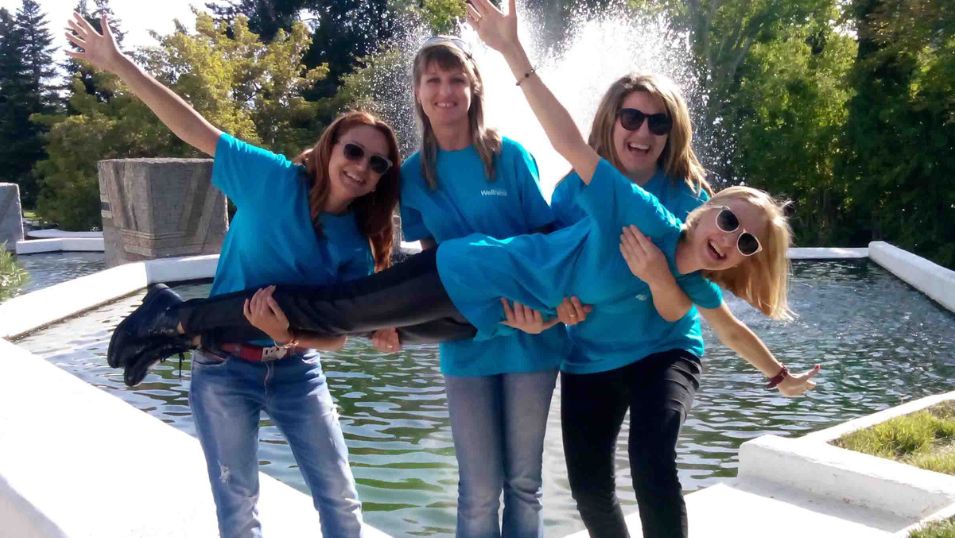
On 8 March, organisations worldwide recognise women’s achievements and renew their commitment to gender equity. The 2026 theme, “Give To Gain,” highlights that by providing opportunity, trust, sponsorship, visibility, and voice, we strengthen both individuals and organisations.
Equity is not a one-time initiative; it is shaped by daily team interactions.
When organisations give intentionally, they foster stronger collaboration, broader thinking, greater engagement, and more resilient cultures.
Culture is most visibly shaped at the team level. While policies set direction, teams define daily experience. This makes International Women’s Day especially relevant to team development.
High-efficiency teams:
These are not “gender initiatives”; they are performance imperatives.
International Women’s Day provides a focused occasion to pause and ask:
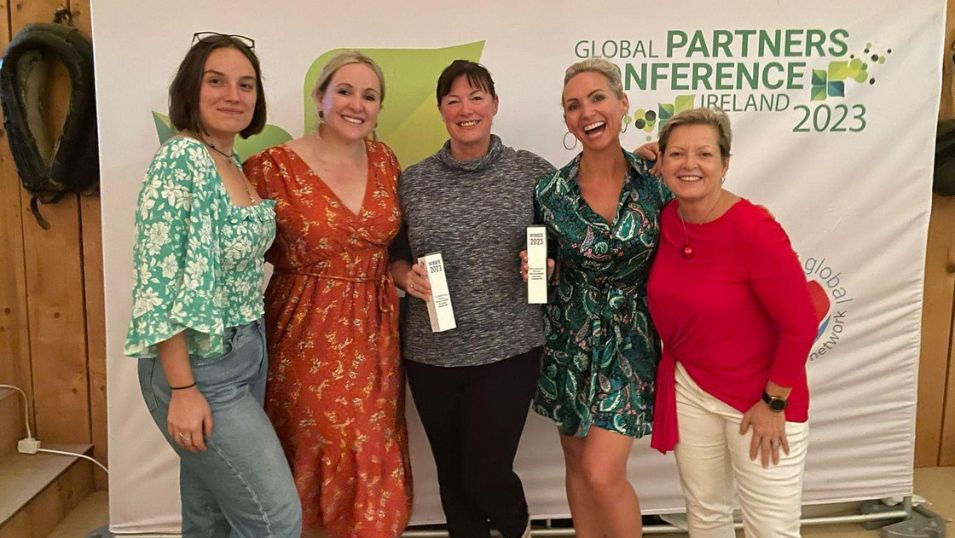
At Catalyst Global, Giving is a core value. “Give To Gain” aligns with our approach to team building: shared experiences that foster empathy, trust, accountability, and collective ownership.
This is not a symbolic gesture; it reinforces behaviours that sustain inclusive, high-performing cultures.
A well-designed team experience can:
When teams experience inclusion, not just discuss it, change becomes embedded.
Across leadership, sponsorship, innovation, and contribution, the key question remains: how deliberately does your organisation distribute opportunity, visibility, and power? International Women’s Day is most meaningful when it prompts examination, not just recognition.
Experiential learning helps reveal the patterns that shape culture but often go unspoken. It enables teams to observe how power circulates, how ideas are elevated, and how contributions are acknowledged in practice.
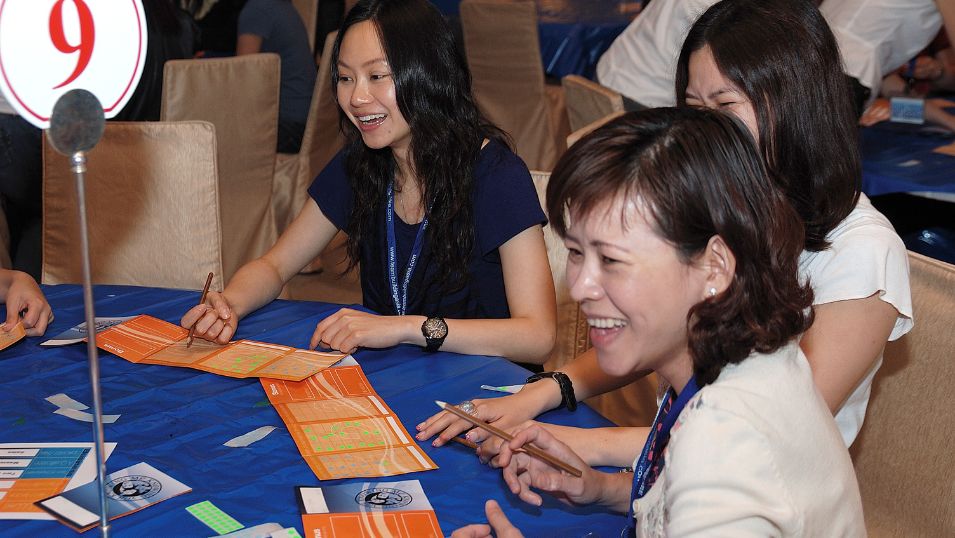
Peak Performance focuses on how leadership operates under pressure. The programme is built around defined roles, interdependence, and strategic delivery, requiring participants to balance authority, knowledge, and cooperation. Its value for International Women’s Day lies in how it naturally reveals the distribution of leadership and influence within teams.
When roles are clearly assigned, and outcomes are time-sensitive, patterns quickly emerge. Who assumes authority? On what basis is that authority accepted? Is expertise genuinely recognised, or does confidence dominate? How is information shared, and who controls its flow? Does the team actively seek contributions from every member, or does participation narrow as pressure increases?
These dynamics reflect the realities of organisational life. Leadership is rarely declared; it is demonstrated through behaviour. Similarly, inclusion is not often explicitly denied; it is shaped by subtle cues such as who is invited to contribute, whose input is acknowledged, and whose perspective is pursued.
In the context of International Women’s Day, the debrief becomes a focused exploration of these behaviours. Facilitators can guide participants to reflect not only on the decisions made but also on how they were made. Did leadership opportunities circulate or concentrate among a few? Were quieter voices included? Did competing perspectives strengthen the strategy, or were they dismissed for the sake of speed?
At this stage, the connection to “Give To Gain” becomes clear. When leaders intentionally create space for dissent, expertise, and emerging capability, the team’s strategic quality improves. Engagement and accountability increase. Inclusion becomes measurable through performance outcomes. In this way, Peak Performance demonstrates how equitable leadership directly enhances results.

Global Innovation Game operates in a different but equally insightful context: generating and advocating ideas. Participants collaborate, develop creative solutions, and present their thinking under time pressure. Innovation environments reveal the social dynamics of visibility and power.
In any ideation process, certain ideas gain traction while others fall away. Some contributors become highly visible; others remain peripheral. Confidence, credibility and advocacy often determine which proposals progress, sometimes more than the intrinsic merit of the idea itself. These dynamics are not unique to the game; they reflect everyday innovation processes within organisations.
Through the lens of International Women’s Day, Global Innovation Game provides an opportunity to examine sponsorship in action. Sponsorship is distinct from mentorship. It is not simply advice offered in private; it is advocacy exercised in public. It involves using influence to amplify another person’s contributions, ensuring their ideas are heard, credited, and advanced.
During the facilitated reflection, participants can consider whose ideas were amplified and whose required further advocacy. Did influence correspond with expertise, or with personality? Who came forward to promote a colleague’s thinking? Who ensured credit was accurately attributed in the final presentation? These questions shift the focus from abstract inclusion to visible behaviour.
Here, the principle of “Give To Gain” is strategic, not symbolic. When teams actively support diverse viewpoints and distribute visibility equitably, the quality of innovation improves. Broader input leads to stronger solutions. When organisations practise intentional sponsorship, especially for emerging female talent, they expand their leadership pipeline and strengthen long-term growth. The gain is tangible and competitive.
While Peak Performance and Global Innovation Game focus on leadership and sponsorship in competitive settings, Go Give and Impact extend “Give To Gain” to contribution. Both programs deliver tangible results that benefit communities beyond the organisation, reinforcing the link between internal collaboration and external impact.
These experiences are especially impactful when aligned with B1G1 giving initiatives supporting women and girls through education, entrepreneurship, or community development. In these cases, giving becomes concrete. Teams see the immediate effects of coordinated effort and shared responsibility. Relevance lies not only in the external impact but also in the internal change that purposeful collaboration brings about.
When individuals unite around a cause that goes beyond quarterly objectives, hierarchical distinctions often soften. Empathy increases. Communication shifts. The team experiences a different dimension of accountability, one grounded in shared contribution rather than individual advancement.
When thoughtfully framed for International Women’s Day, these programmes help organisations move beyond token gestures. They show that principles can drive action and that corporate responsibility can align with performance goals. Participants reflect on how joint effort multiplies impact within the organisation and in the communities it serves.

The core insight of “Give To Gain” is most evident here. When teams contribute externally, they benefit internally. Connection, perspective, and engagement all increase. Purpose strengthens cohesion, which in turn enhances performance. Giving does not dilute organisational focus; it sharpens it by aligning people around a shared goal. Across all of these programmes, the common thread is a disciplined examination of how opportunity, visibility, and contribution are distributed.
International Women’s Day is meaningful when it encourages organisations to look beyond celebration and focus on behaviour. When experiential learning uncovers patterns that might otherwise go unnoticed, the day serves its true purpose: as a catalyst for measurable change.
International Women’s Day should be more than a message; it should be a commitment.
When organisations intentionally offer opportunity, equity, advocacy, and voice, they gain stronger leadership, stronger teams and sustainable performance.
That is not symbolic. It is strategic.
© 2026 All rights reserved.